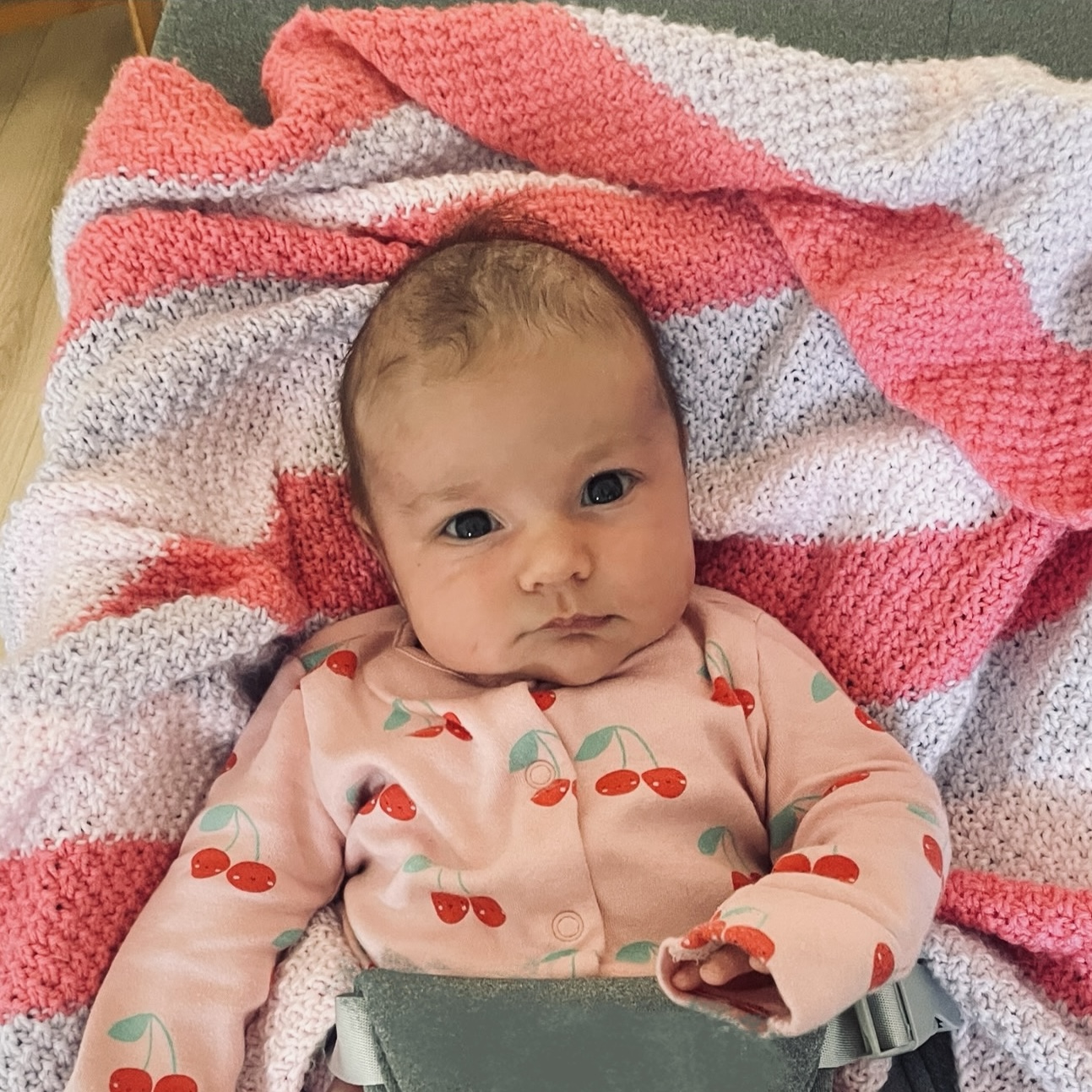
Baby Edith was due in July. Her mother, Adele, contacted me in March prior to her birth. This was her second baby. Her mother told me how she had struggled feeding her first baby, and now felt quite emotional with the thought of feeding her second baby. I replied to her email advising her that I could help and how.
I am so grateful to have worked with Anna pre and post birth with my daughter. Anna is warm and friendly and always made me feel heard. This kind of support is gold dust and really helped me to stay positive and feel good about my feeding journey.
— Adele, Edith’s mum
Antenatal support
We set a date for me to do a reflection session at home, prior to Edith being born. During the session Adele reflected on what had happened with her first Baby Eric. This bought up a lot of emotion for Adele, the pain and the trauma were real. However, by unpicking her first breastfeeding journey I was able to give some possible explanations to what may have happened with Eric.
Adele had reached out to breastfeeding experts with Eric but his problems continued and did not improve. Despite the difficulties, Adele continued to breastfeed Eric which came at a cost to her emotionally and physically.
Adele had always felt that the issues they had were her fault and she hadn’t done enough for her son. During the reflection session we sat with the thought that Adele had done her absolute best for Eric and that every drop of breastmilk was valuable.
I had a feeling that Eric possibly had a tongue tie, which led to oversupply of milk and a very unsettled baby during and after feeding. I explained how all his symptoms and their breastfeeding problems could be linked to this theory. At the end of the reflective session, we made a plan for when Baby Edith was born and how I could support Adele in her new breastfeeding journey.
I followed up the session by:
- Sending Adele some antenatal guided meditations for her to listen to, to help keep her calm in the run up to her birth and to aid connection with her baby.
- Writing some guided affirmations for her to use to keep her positive in the run up to her new breastfeeding journey, but to also celebrate what she had achieved with Eric.
- Making a list of people we could contact if we felt Baby Edith needed support (cranial osteopaths, tongue tie practitioners).
- Offering a postnatal visit to give support and reassurance in those first few days/weeks.
Here are a few examples of the affirmations I wrote for Adele:
“I was the best mum I could be for Eric and he benefitted from all the breast milk I gave him.”
“I trust my body and know that it can make milk for my next baby.”
Postnatal support
Following the birth of Baby Edith, I arranged a home visit with Adele. Edith had been feeding well since birth. I watched a feed whilst I was with Adele and made a few adjustments. There were no obvious signs of a tongue tie but Adele reported that at times Edith would be fussy at the breast.
We discussed a backup plan if Edith continued to be fussy and we felt there was a problem. Reassurance and support were given during the visit as needed by Adele. I gave Adele guided relaxations to do with her newborn to help keep them both calm as well as some updated affirmations.
I checked in with Adele every week to see how the feeding was going. At about 4 weeks of age, Adele advised me that things had been up and down. She felt that Edith had more reflux and was unable to lie on her back. She had taken her to an osteopath as advised by me, who had said they were happy with her. I gave Adele the option of another home visit or a catch-up phone call. I did another home visit and observed Adele feeding Edith.
During the second home visit we talked about the reflux and what could be causing it. We talked about getting another osteopath to look at Edith due to her being more unsettled and we also discussed safe sleeping so that Adele could get more sleep.
A day later Adele sent me a video of Edith feeding and as soon as I saw the video I was concerned. Had we missed a tongue tie? Was this baby compensating and had managed to latch to feed but to what detriment?
The video showed Edith sucking but making clicking noises and then what looks like ‘gagging’ on her milk. I asked Adele if I could share the video with an IBCLC (Lactation consultant) friend to get further advice. The lactation consultant agreed that Edith should have a full oral assessment and check for tongue tie. I gave Adele the details of private tongue tie practitioners.
A week later Edith was assessed as having an 80% tongue tie with a very restricted tongue and a tight jaw. She had managed to compensate for so long to enable breastfeeding. Adele immediately felt that the latch was different. She took Edith to another cranial osteopath who after a few sessions was really happy with her progress and felt she wasn’t as tight as before.
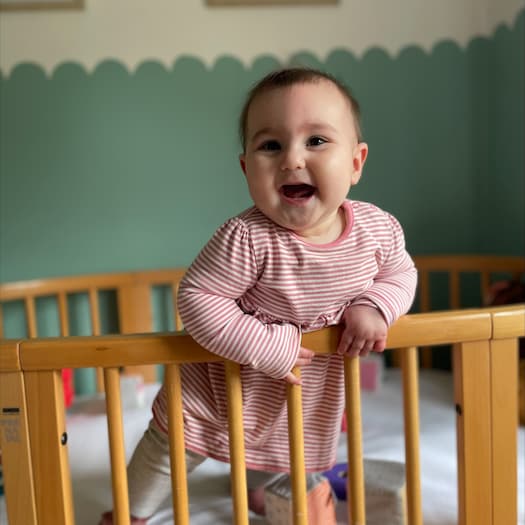
Feeding continued to go well and Edith is still feeding at 8 months! Happy mummy, happy baby!
Read reviews from other mums I’ve supported.
